


Projects
Filter Optimization Prototype
Struktureret redesign af et luftfiltersystem med fokus på reduceret tryktab og forbedret effektivitet.
Problem
The existing filter assembly showed excessive pressure loss and inconsistent particle retention performance under variable load conditions.
Context
The system was part of a larger industrial airflow unit operating under fluctuating environmental and load parameters. Previous iterations had focused primarily on manufacturability rather than performance stability.
Constraints
- Must reuse existing housing geometry - No change to mounting interface - Maximum 5% cost increase allowed - Maintain service accessibility
Hypothesis
By redesigning the internal flow path and introducing controlled turbulence zones, pressure loss could be reduced while improving filtration efficiency.
Design Decisions
The redesign focused on internal geometry modifications rather than material changes. CFD-informed channel shaping was introduced to guide airflow more uniformly across the filter medium.
Test Setup
A controlled airflow rig was used to simulate operating conditions across three load profiles. Pressure drop and particle capture were measured.
Validation
The prototype achieved a 12% reduction in pressure drop and improved capture efficiency by 8% compared to baseline.
Optimization
Minor adjustments to rib geometry further stabilized flow distribution without increasing production complexity.
Result
The final design met performance goals while remaining within cost constraints and maintaining assembly compatibility.
Conclusion
The project demonstrated that structural internal redesign can significantly improve system efficiency without altering external interfaces.
This prototype focused on internal geometry refinement and system-level performance improvement. The work illustrates a structured engineering approach combining hypothesis-driven design with measurable validation.
picture 1
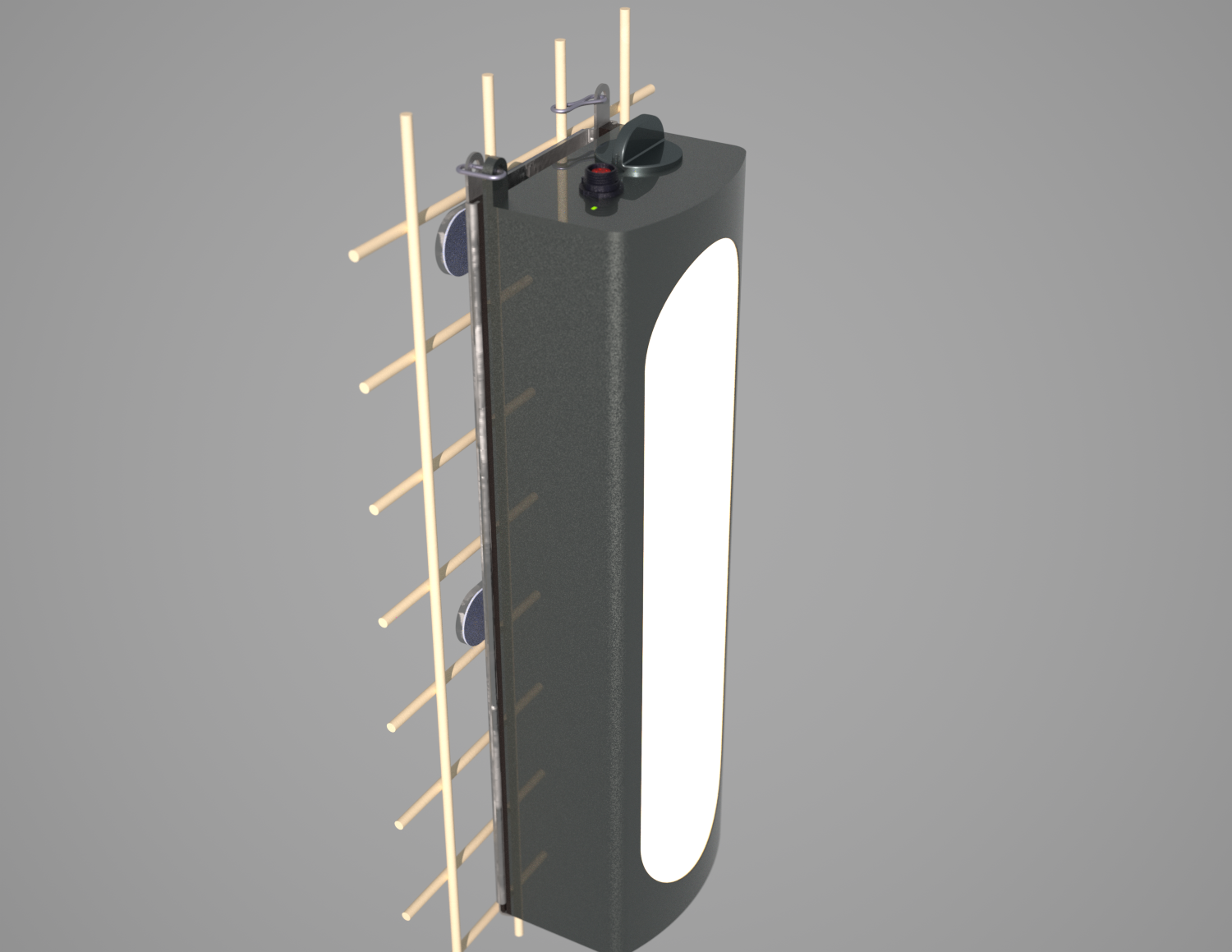
Table 1
picture 2
picture 3
Open gallery
Iteration 01
LED variation