

Projects
H2S Warn — Modulært kloaksensorsystem
H2S Warn was a low-volume industrial project developed for monitoring in sewer environments. My contribution was mechanically focused and centered on a two-part product architecture: a sealed upper battery/electronics unit and a serviceable lower sensor unit. The design was developed around sealing, controlled assembly, maintenance access, and practical low-volume production in POM. The battery section was conceived as a replaceable module, while the sensor section could be disassembled for service and filter replacement. The project formed part of an ATEX-approved product context, while certification documentation and electronics responsibility were outside my role.
Overview
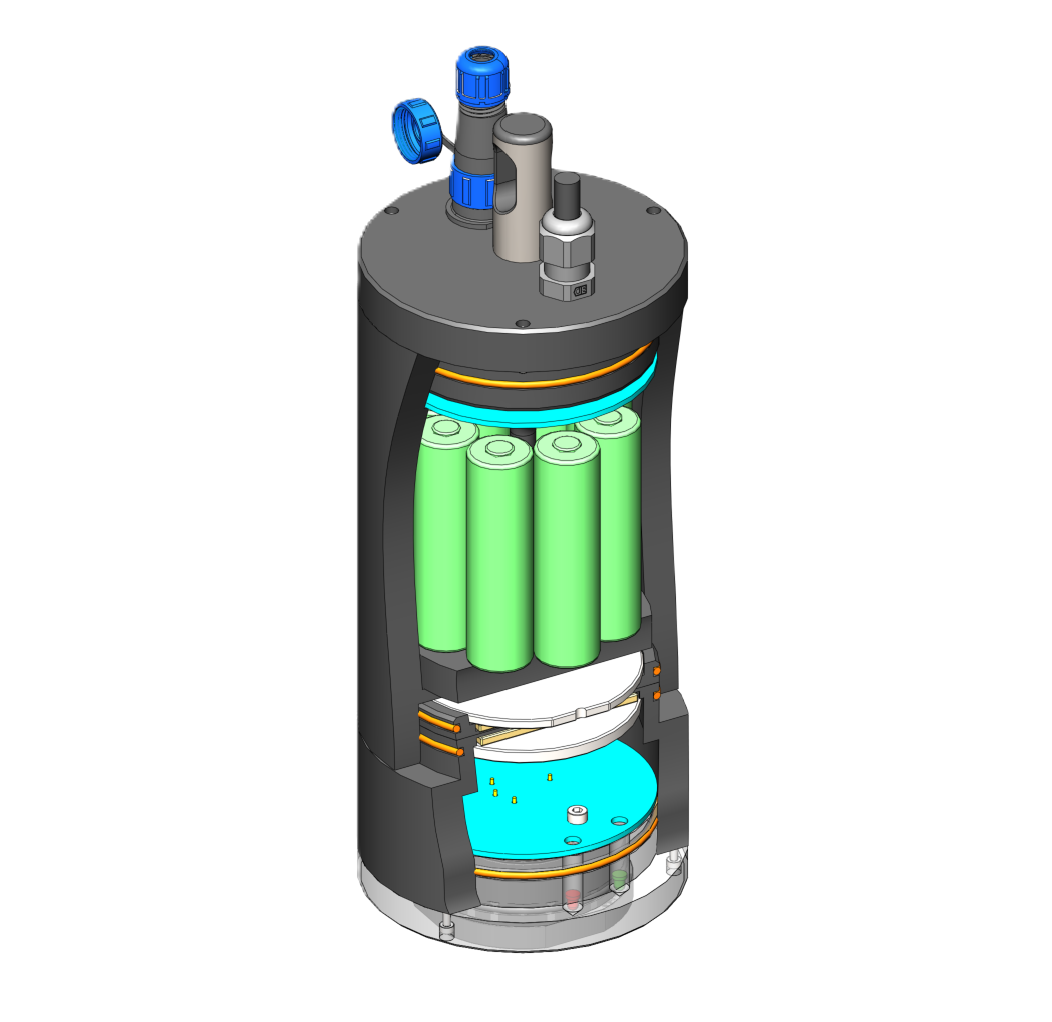
H2S Warn was developed as a low-volume sensor system for use in sewer environments. The strength of the project lay in a robust mechanical architecture that separated the battery/electronics side from the sensor side into two clear functional zones. This made it possible to combine sealing, service access, and practical handling in a compact industrial unit.
Mechanical architecture
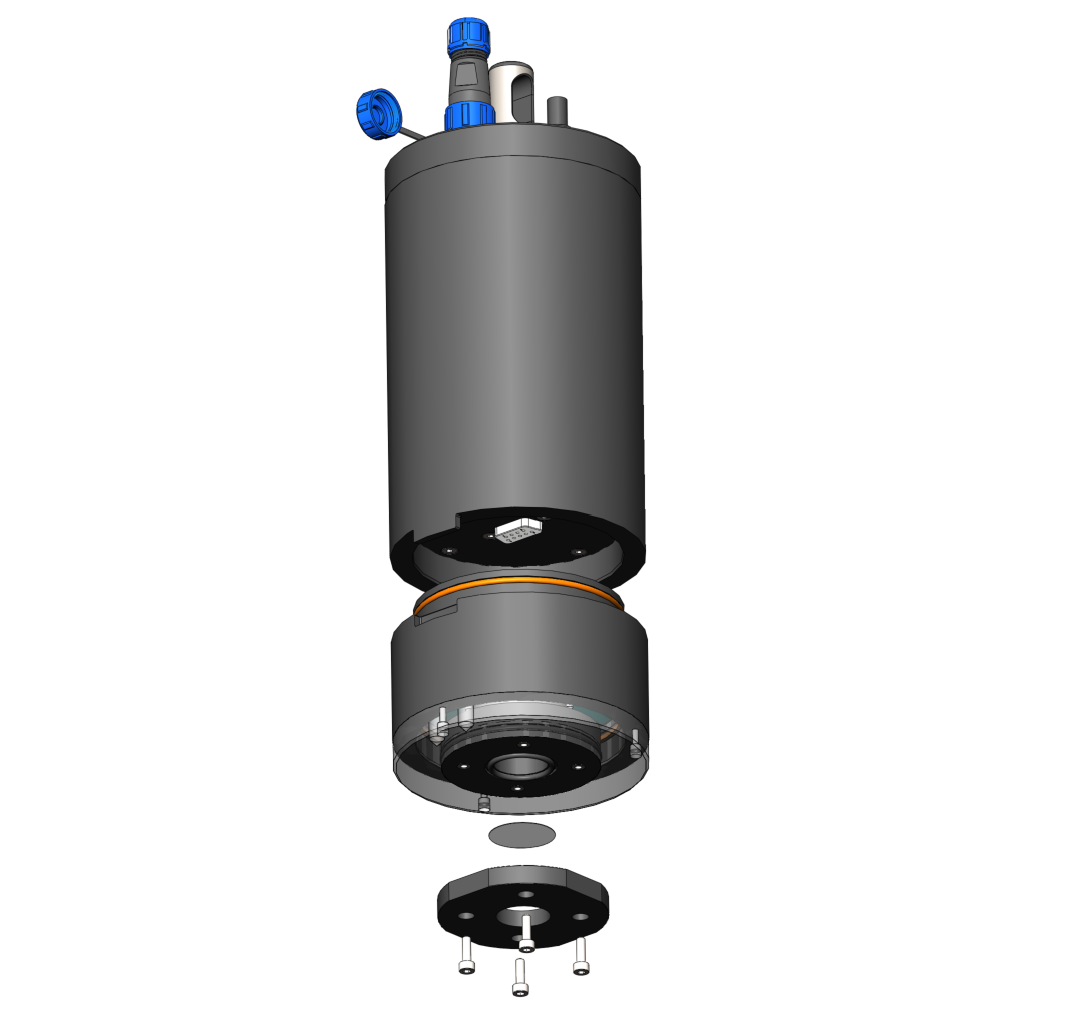
The product was divided into two main sections: an upper battery/electronics unit and a lower sensor unit. These two sections were held together by magnets, sized to keep the assembly secure in operation while still allowing manual separation during service. A guided orientation feature ensured that the two sections could only be assembled in the correct position, protecting the connector interface from misalignment or damage.
Project Context
he system formed part of an ATEX-approved product context intended for operation in a demanding environment. My contribution was mechanical and design-focused rather than certification- or electronics-led. For that reason, this case is centered on the part of the project I actually developed: the housing architecture, assembly logic, sealing strategy, replaceability, and service-oriented construction.
Sealing and Battery Section
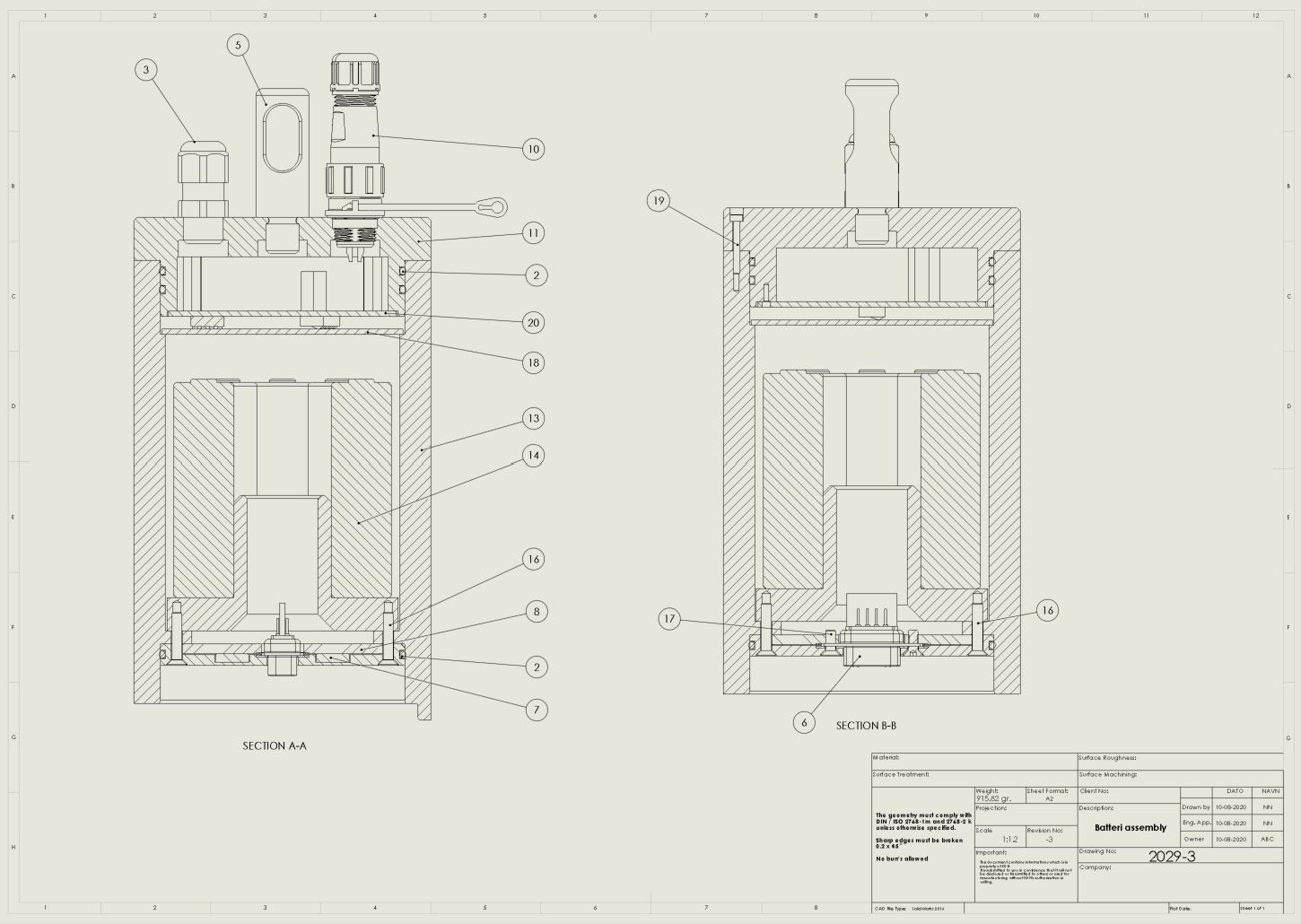
The upper section was developed as a sealed and replaceable unit. Batteries and electronics were located in the top module, where the construction was sealed both at the bottom and at the top using O-rings and compressed sealing surfaces. The lower closure was designed so that a plate with gasketed connector sealing could be screwed into place while also retaining the epoxy during potting. The top cap incorporated the charging connector, cable entry, and a suspension point for lowering the unit into the sewer system. The overall intent was that the full battery section could be replaced as a complete module once battery life had been reached.
Sensor Section and Serviceability
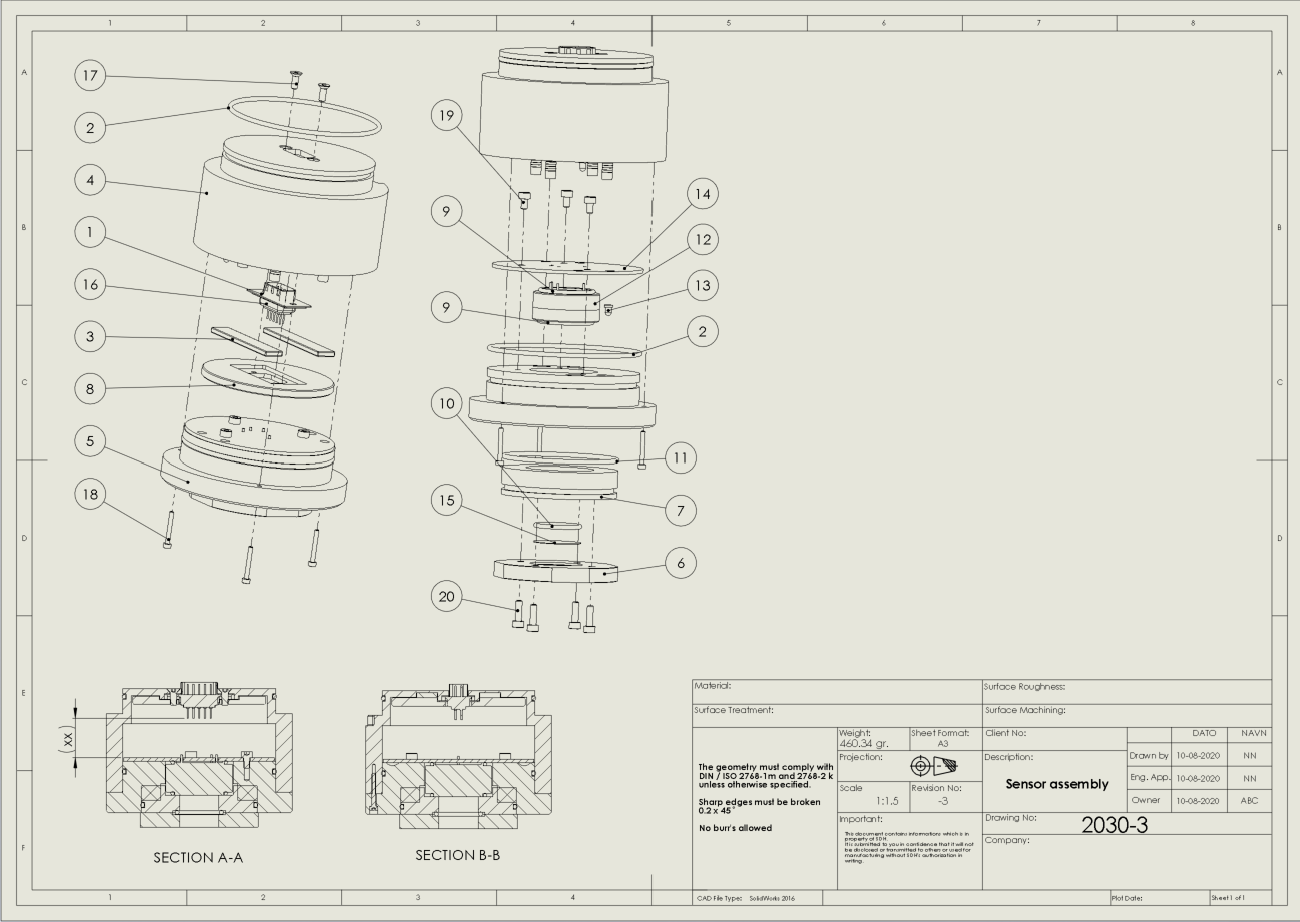
The lower sensor section was developed as a serviceable multi-part construction. The architecture provided access for filter replacement and maintenance without requiring the entire product to be rebuilt. A removable lower cap gave access to the filter area, while the internal layout allowed sensor-related parts to be disassembled and replaced. This made the sensor section more practical for operation and upkeep than a fully closed disposable solution.
Assembly and Maintenance
A key design principle was to make the product practical to handle correctly in real use. The magnetic connection between the two main modules simplified separation and reassembly, while the guided orientation reduced the risk of error when reconnecting top and bottom. The project was therefore not developed only as a sealed enclosure, but as a product in which service access, repeat handling, and maintenance logic were built into the architecture from the beginning.
Production and Material Choice
The internal plates, shells, and cap components were made in POM, a suitable choice for machined, dimensionally stable polymer parts in low-volume production. The production scale was limited, around 100 units per year, so the design was developed around realistic manufacturing methods rather than mass-production assumptions. This resulted in a solution that was both technically robust and adapted to small industrial series.
Role and Scope
My work was focused on the mechanical development and on shaping the product architecture. It did not include ownership of the ATEX certification documentation, nor the detailed electronics development, which was handled by others. This case is therefore deliberately written around the areas I can confidently stand behind: mechanical design, sealing, assembly logic, serviceability, and low-volume manufacturability.